A Turning Point for Wisconsin Workers
Wisconsin has long been a state defined by hard work, innovation, and a strong sense of community. But over the past decade, something has shifted. Policies that once protected and empowered workers have been weakened, and one of the most significant changes has been the implementation of Right to Work laws.
If we are serious about rebuilding a strong middle class and creating a thriving economy for everyone—not just a few—we need to take a hard look at what Right to Work has done to Wisconsin, and more importantly, what ending it could do for our future.
What “Right to Work” Really Means
Despite its name, Right to Work doesn’t guarantee anyone a job. Instead, it allows employees in unionized workplaces to opt out of paying union dues while still benefiting from union representation. While that may sound fair on the surface, the long-term impact is anything but.
Unions are responsible for negotiating wages, benefits, and working conditions—not just for their members, but for entire workplaces. When fewer people contribute to that effort, unions become weaker. And when unions are weaker, workers have less leverage.
The Real Impact on Wages and Communities
States with Right to Work laws consistently see lower average wages, fewer benefits, and less workplace security. That doesn’t just affect union members—it affects entire communities.
- Lower wages: Workers earn less on average in Right to Work states.
- Weaker benefits: Health care, retirement plans, and paid leave become less common.
- Reduced bargaining power: Workers have fewer tools to advocate for fair treatment.
When wages decline, local economies suffer. Small businesses feel the impact. Families feel the strain. And the gap between those at the top and everyone else continues to grow.
Why Ending Right to Work Matters
Ending Right to Work isn’t about forcing anyone to join a union—it’s about restoring balance. It’s about ensuring that workers who benefit from collective bargaining also contribute to maintaining it.
Stronger unions don’t just help workers—they help entire economies. Historically, unions have been one of the most effective tools for building the middle class, reducing income inequality, and creating pathways to upward mobility.
By ending Right to Work in Wisconsin, we can:
- Raise wages across industries
- Strengthen workplace protections
- Rebuild the middle class
- Create more stable, resilient communities
A Worker-Friendly Wisconsin Is Possible
This isn’t about going backward—it’s about moving forward with intention. It’s about recognizing that a strong economy starts with strong workers.
Wisconsin has the opportunity to lead again—to become a model for what a worker-friendly state looks like in the modern economy. That means prioritizing policies that empower people, reward hard work, and create real opportunity.
Ending Right to Work is a critical step in that direction.
The Bottom Line
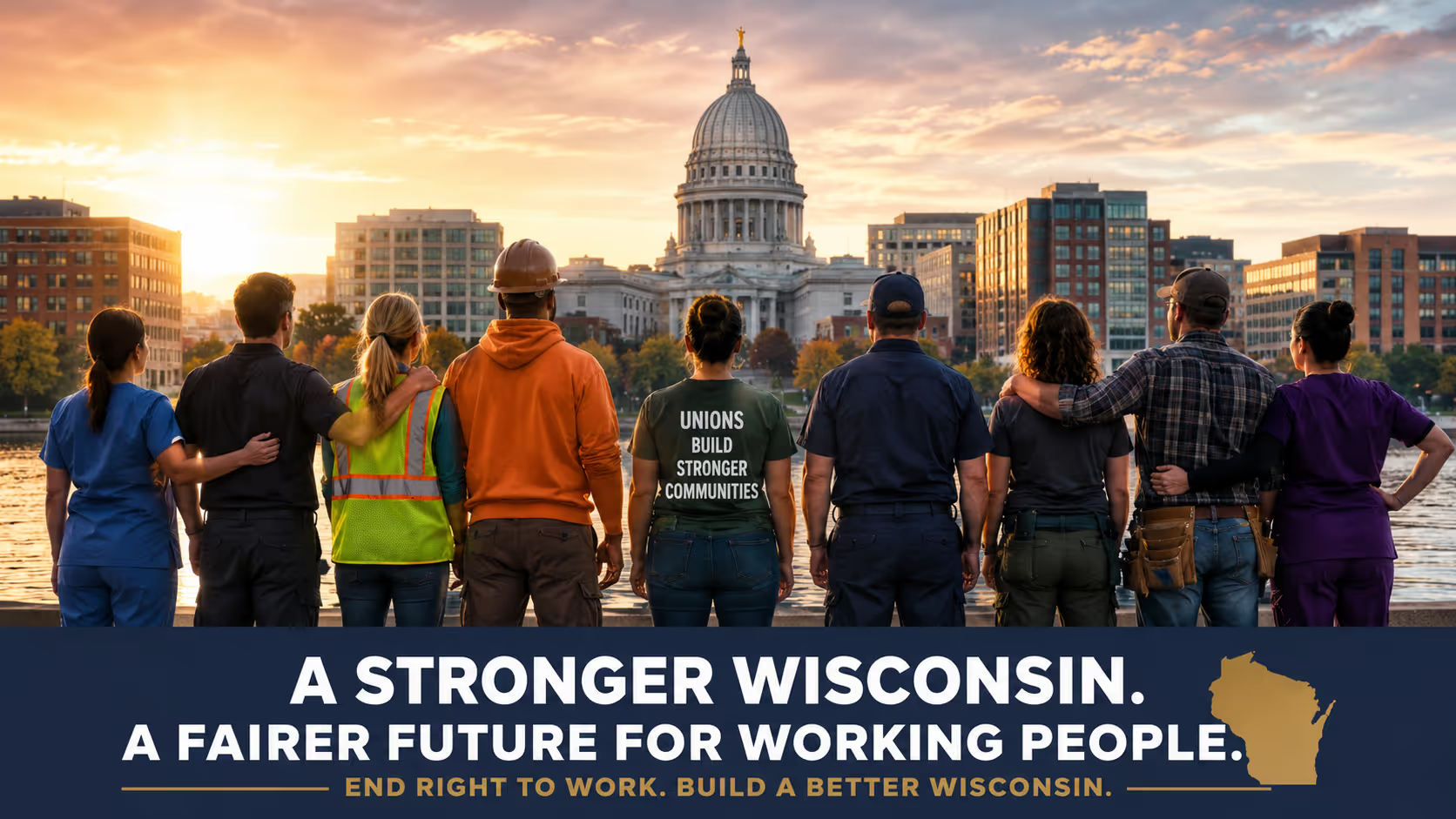
If we want a stronger Wisconsin, we need to invest in the people who make it work every day. That means giving workers a real voice, fair pay, and the ability to build a future they can be proud of.
It’s time to make Wisconsin worker-friendly again.

Richard Pulcher
Richard Pulcher, a longtime resident of Lublin, WI since 1990, is an Augustana College alumnus with a B.A. in Economics. He is deeply involved in his local church and community, driven by a steadfast passion for fostering positive change and development in his local area. Richard's insights reflect his commitment to community enhancement and his rich experiences in Lublin.